Three cohorts, one mission: advancing high‑impact off‑grid innovation through the Efficiency for Access Design Challenge Accelerator Programme
The Efficiency for Access Design Challenge Accelerator Programme, delivered in collaboration with Energy Catalyst, has successfully completed its third round. The programme supported impressive innovations from university teams, located across Africa and India, developing high-performing, affordable off and weak grid appliances to accelerate access to clean energy.
Funded through UK aid via the Transforming Energy Access (TEA) platform and the IKEA Foundation, and in partnership with Energy Catalyst implementing partners, Eigen Ventures and Intellecap, the programme delivered 5 workshops on market & customer understanding; developing a business model canvas and value proposition; supply chain and distribution; fundraising and financial modelling; and team building.
Teams were also assigned mentors who supported them to bring their early-stage business ideas closer to commercialisation. Participant teams spent three months on the learning programme before they delivered a final investor style pitch to demonstrate what they learned on the programme and where they plan to take their ideas over the next year.
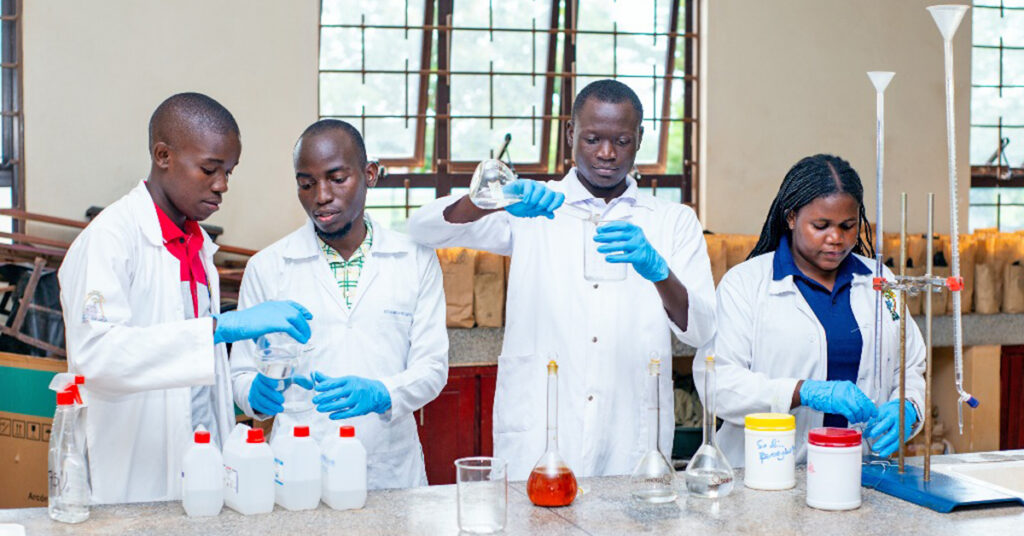
In this cohort, we supported 7 teams:
Distinction
Eco-solar cassava flash dryer – EcoFlash (Uganda) – Oscar Brian Ojok, Joyce Ruth Agilo, Lynnete Bananuka
The EcoFlash Dryer is an innovative, sustainable solution designed to enhance cassava drying efficiency and quality. It utilises solar energy and cassava waste to power a heat exchanger and combustion chamber, with automated systems ensuring consistent, high-quality drying.
By reducing post-harvest losses (20-25% due to inefficient traditional methods), lowering operational costs, and minimising environmental impact through renewable energy, it targets smallholder farmers and SMEs.
The dryer improves cassava marketability, supports local economies, and aligns with UN Sustainable Development Goals, including affordable energy, poverty reduction, and climate action.
Highly commended
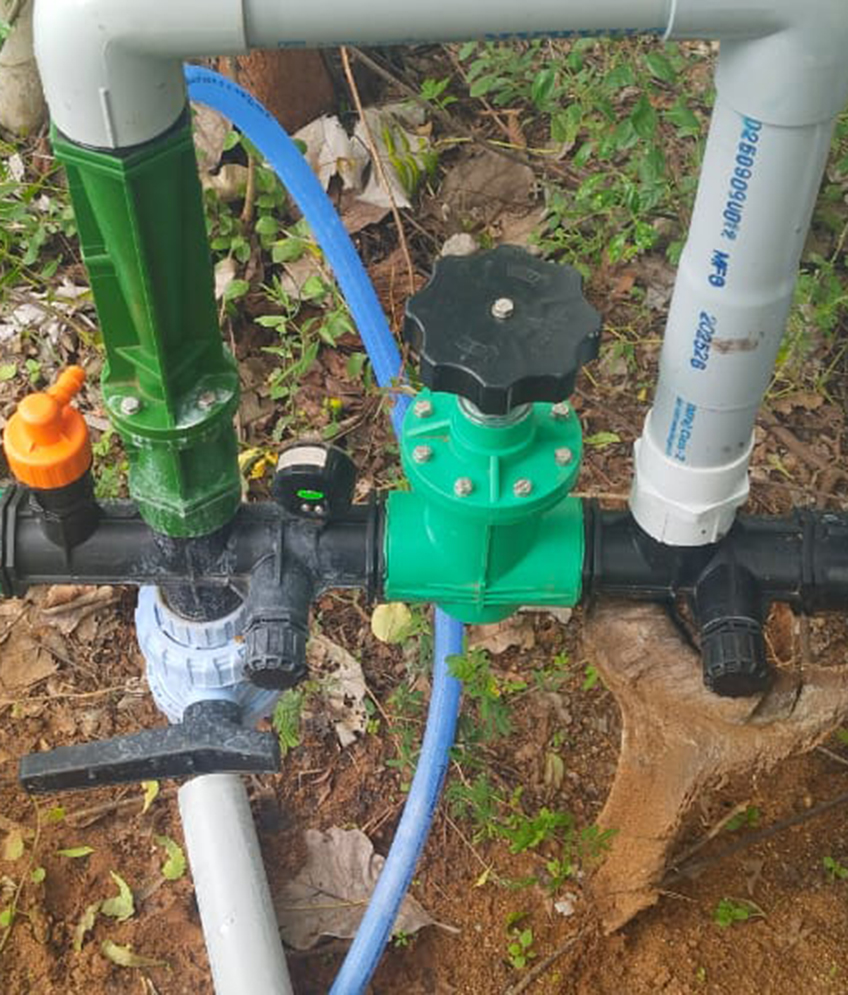
Smart irrigation system with fertiliser and pest control (India) – Arun S, V. Siva Rami Reddy, J Beaula Jenefa, Nalla Suneela, Reddy Nithin Thummala
Compared to traditional irrigation systems which rely on manual intervention or predefined schedules, this smart irrigation system uses IoT technology to automate irrigation systems to optimise water usage based on real-time environmental conditions such as moisture and weather, which in turn increases efficient irrigation practices that can cut operational costs for farmers, improve crop yields and resource sustainability.
This project aims to develop such a system, utilising sensor networks, automation, and solar energy, to deliver an affordable, self-sustaining irrigation solution for farmers.
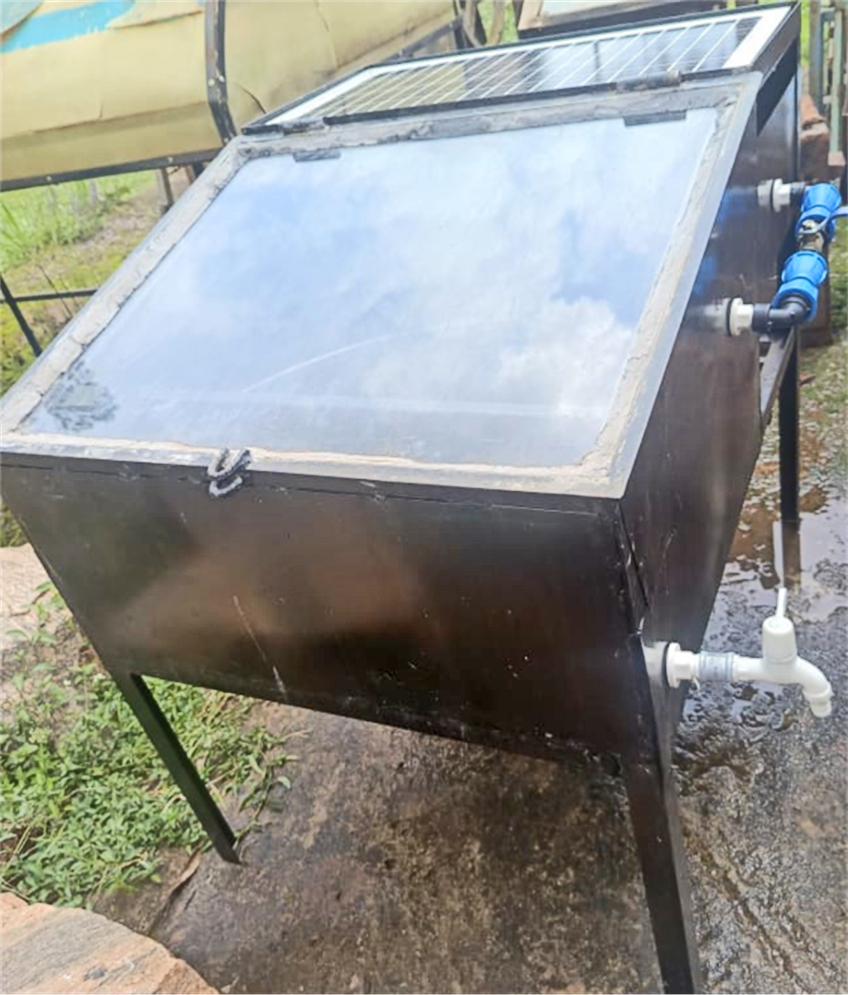
Hydrogel solar evaporator for water purification – SOLGEL (Uganda) – Brian Stephen Pjede, Rosemary Nyamungu, Madoi Shaidu, Grace Aloysious Bakulumpagi
SOLGEL is an innovative water purification solution designed to address clean water scarcity and energy poverty in underserved rural and refugee communities. The project design utilises chitosan-polypyrrole-based hydrogel material that efficiently harnesses solar energy to evaporate and purify contaminated water.
The result of this is clean and safe drinking water in off-grid communities.
Finishers
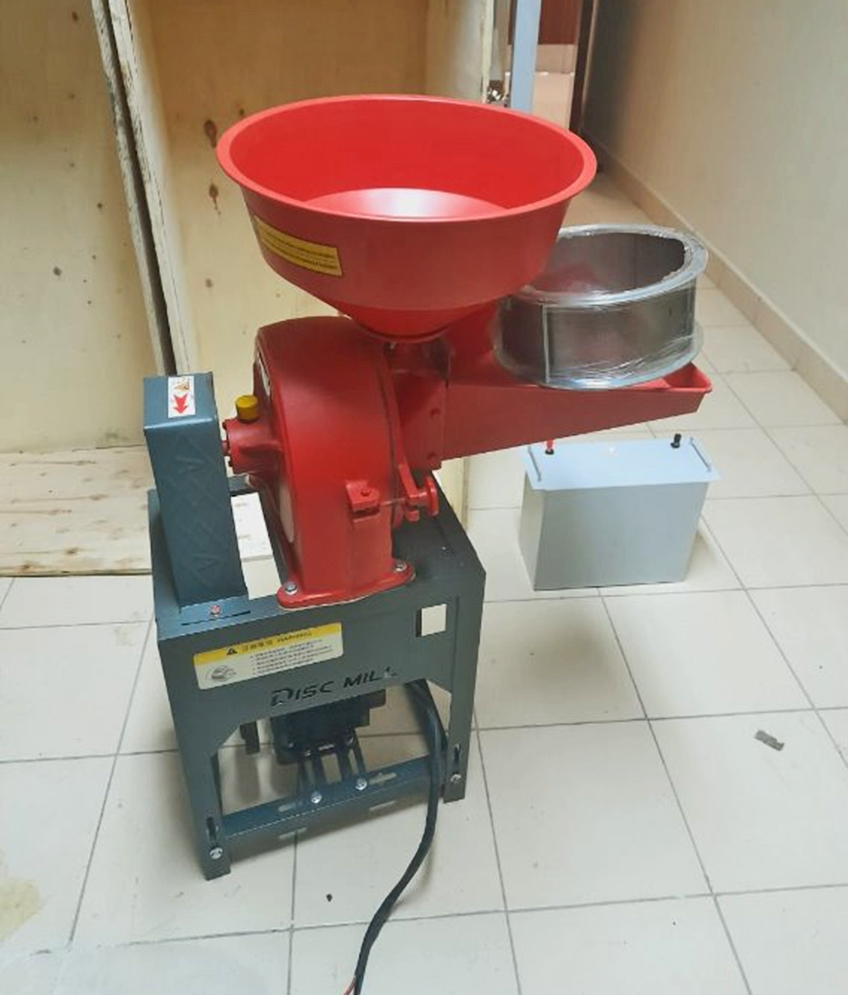
Solar powered grain mill (Kenya) – Lucy Siamanta, Lemi Tereka
The team is developing a solar-powered grain mill that offers affordable, energy-efficient milling for rural off-grid communities. It features a custom DC motor and a locally assembled battery system to ensure consistent performance, even during low-sunlight conditions.
This solution improves food security, supports local farmers, and drives renewable energy adoption in underserved areas.
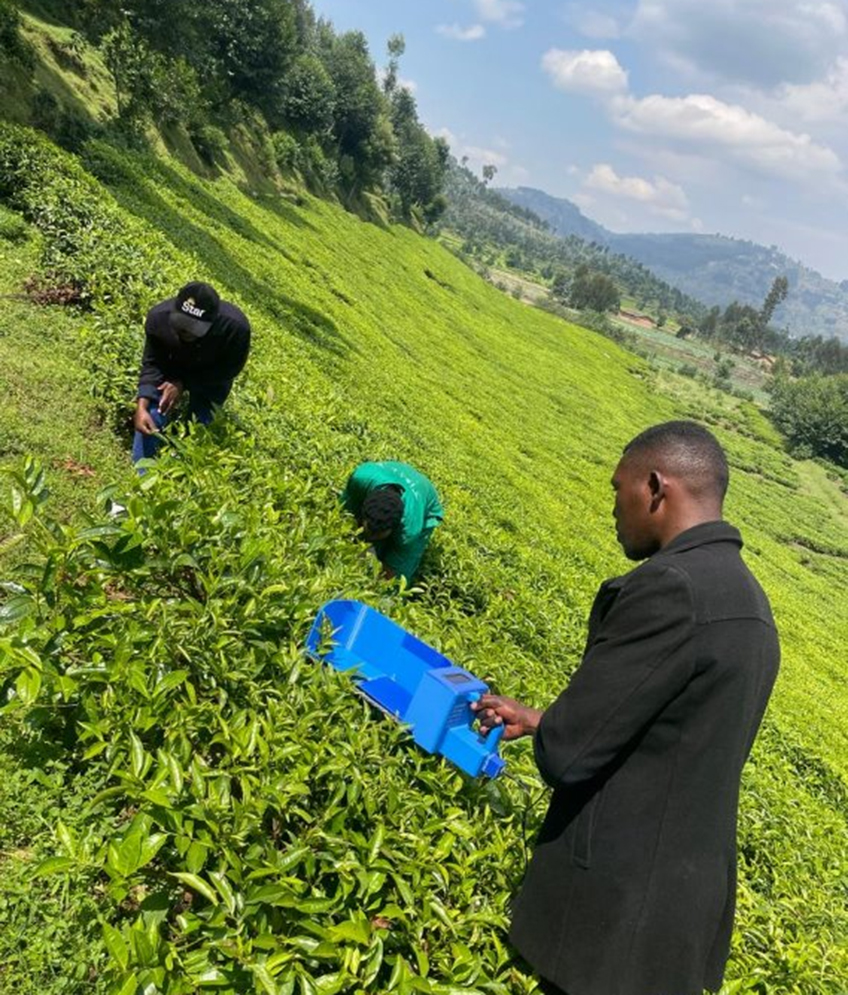
Solar powered tea leaf harvester (Rwanda) – Yvonne Muhoza, Alexis Mugisha, Olivier Muhirwa Nkusi, Blaise Jimmy Gater, Karamaga Uwase
The solar-powered tea leaf harvester is an innovative solution for cooperative companies in Rwanda, where tea is the second cash crop, contributing 15% of agricultural exports. This technology will enhance harvesting efficiency while supporting sustainable agricultural practices which supports several Sustainable Development Goals.
The technology aligns with Rwanda’s Vision 2050 by promoting renewable energy use and reducing environmental impact, ultimately boosting the competitiveness of Rwanda’s tea sector in the global market.
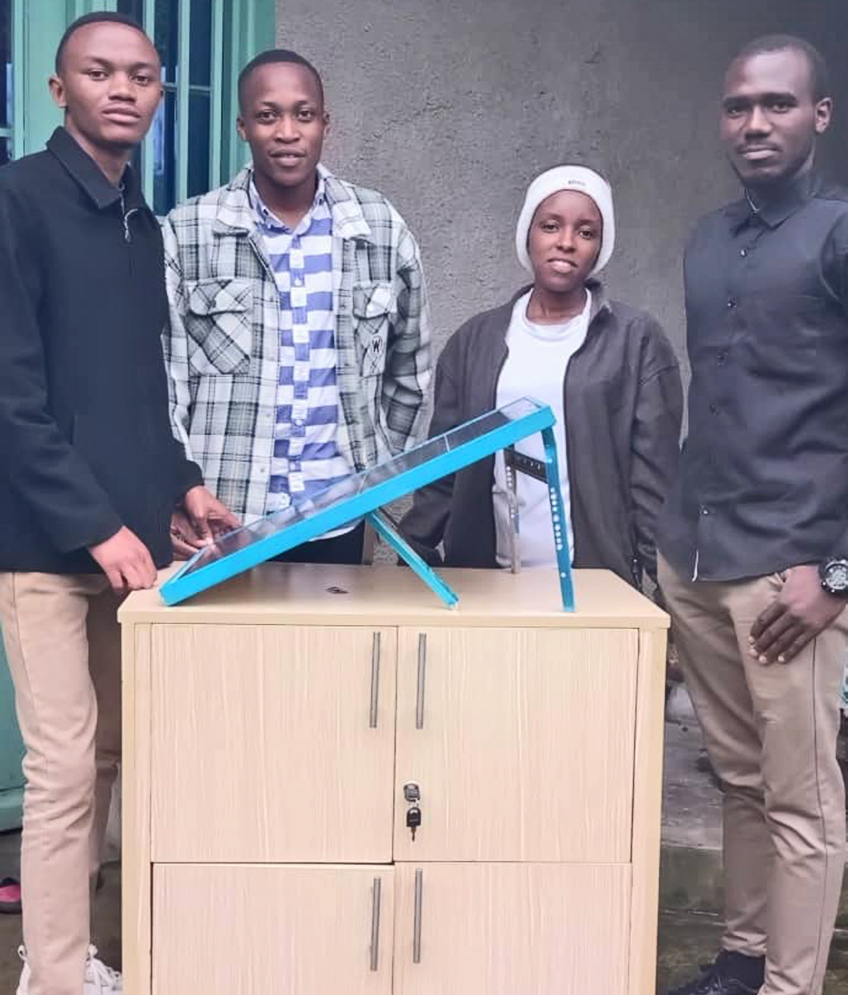
Solar powdered grain storage (Rwanda) – Albert Niyonzima, Joella Amahoro Uwase, Robert Igihozo Irene, Esther Turizimana, Bohneur Nkwaya Ndisanze
The team have developed a solar-powered grain storage project that utilises solar panels to generate electricity for powering grain storage operations, such as climate control and aeration.
It incorporates sensors and AI to monitor the internal environment of the grains, aiming to reduce energy costs and environmental impact while optimising grain preservation.
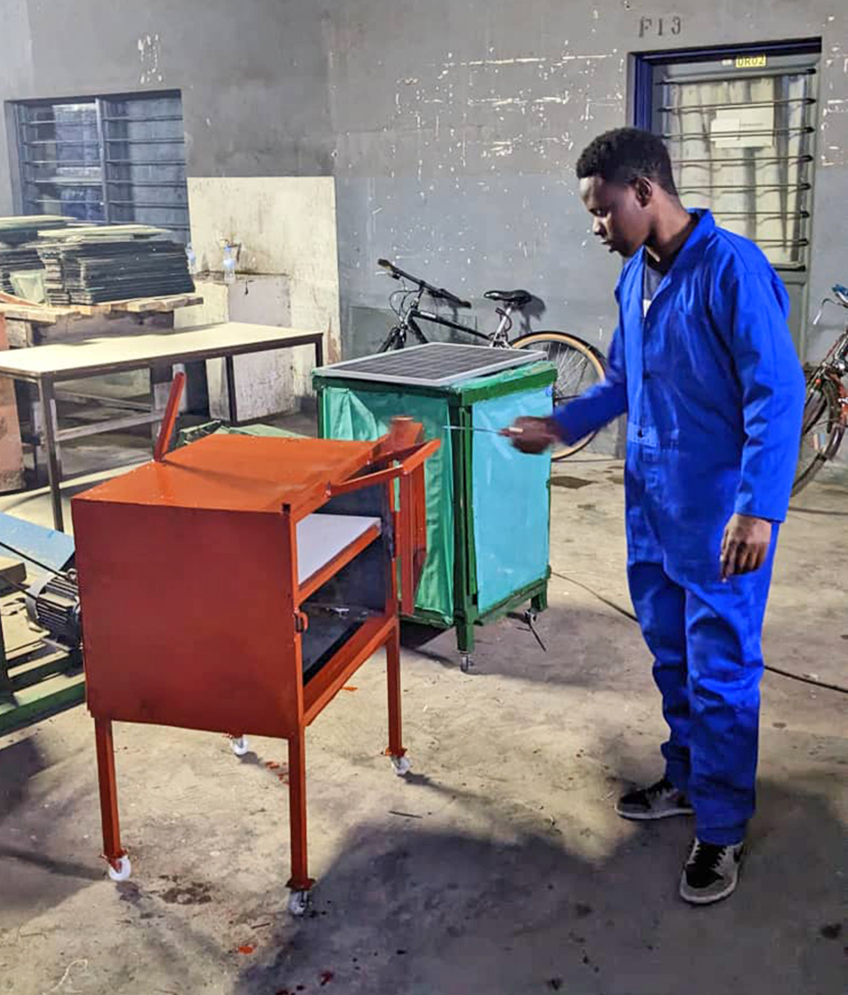
IoT solar powdered fishpond aerator (Rwanda) – Cedrick Iradukunda, Elisa Mbeshejwehonayo, Benjamin Niyomugabo, Assouman Zachariah, Didier Bonheur Didier Mugisha
IoT Solar-Powered Fishpond Aerator is a transformative clean energy solution designed to revolutionise aquaculture in Rwanda and beyond by tackling the pervasive issue of oxygen depletion in fishponds, a problem that currently leads to devastating 11–60% mortality rates among fish stocks, crippling the livelihoods of smallholder farmers who depend on aquaculture for income and food security. The aerator system leverages cutting-edge solar energy, IoT technology and intelligent energy management to deliver a sustainable, affordable, and highly efficient alternative to traditional diesel-powered aerators, and thus meeting several Sustainable Development Goals.
Testimonials:
The successful delivery of the Efficiency for Access Design Challenge Accelerator Programme for three consecutive cohorts highlights the strong and effective collaboration between Energy Saving Trust, co-Secretariat of Efficiency for Access, and the Energy Catalyst programme. By working together under the TEA platform, the teams have created a unique initiative that bridges early-stage innovation with market driven acceleration support. This partnership has enabled student innovators to advance their prototypes, strengthen their business models, and better understand the commercial and social contexts in which their technologies can thrive. The continued collaboration across these programmes demonstrates the TEA platform’s commitment to nurturing the next generation of clean energy entrepreneurs and supporting scalable solutions that can deliver meaningful impact in underserved communities.