Powering healthcare: clean energy at the frontline of community well-being
This is Part 1 of our series, Powering Essential Services: Clean Energy Solutions Transforming Daily Life in Underserved Communities. Read Part 2: Powering Transportation (coming soon) | Part 3: Powering Education (coming soon).
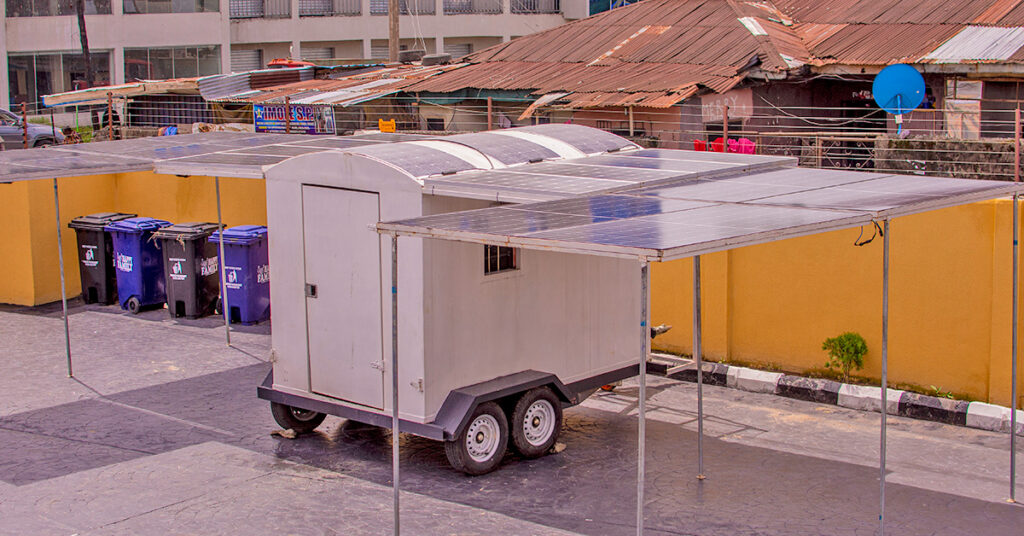
From surgical lighting to vaccine refrigeration, healthcare in sub-Saharan Africa depends on energy at every level.
Yet across the region only 40% of healthcare facilities have reliable electricity, and even among hospitals, just half can count on a consistent power supply. The consequences reach into every aspect of care. Reports from across the region illustrate what this means in practice: vaccines spoil and children go unimmunised; laboratory equipment is damaged by surges, cutting communities off from diagnostics; deliveries in maternity wards are performed by the light of a mobile phone; staff recruitment, training programmes, supply chains, and community trust in health systems all suffer when the power cannot be relied on.
The failures run along a chain, from the hospital ward to the supply warehouse to the last mile of vaccine delivery. At each point, communities pay the price. At facility level, unreliable grids force hospitals into dependence on diesel generators, meaning fuel, maintenance, and replacement costs consume budgets that would otherwise fund medicines, staff, and equipment. In off‑grid and remote settings, scarce resources make it hard to access both spare parts and technical expertise. As a result, energy systems fail – and health facilities are left without reliable power. For last-mile communities, vaccines must travel where no cold chain exists, and a single temperature failure can render an entire consignment unusable. But at each of these points, proven clean energy solutions are already demonstrating that reliable healthcare power does not have to wait for the grid.
Energy Catalyst, an Innovate UK programme, is supporting innovators with funding and technical assistance at each link in this chain. Three projects in Kenya, Somalia, and Nigeria illustrate what this looks like in practice.
Solarising Kenya’s public hospitals
Solar is mature and affordable in Kenya’s private sector, but public hospitals, the facilities serving the poorest populations, have been largely excluded. These hospitals depend on unreliable grid connections backed by diesel generators that can cost more than £200 per day to run during blackouts, draining budgets meant for patient care. There are multiple barriers to replacing diesel with solar systems, from procurement rules not designed for leasing, to irregular county government payment cycles, but one of the most persistent is financial: government-run facilities lack the track records that commercial solar providers require.
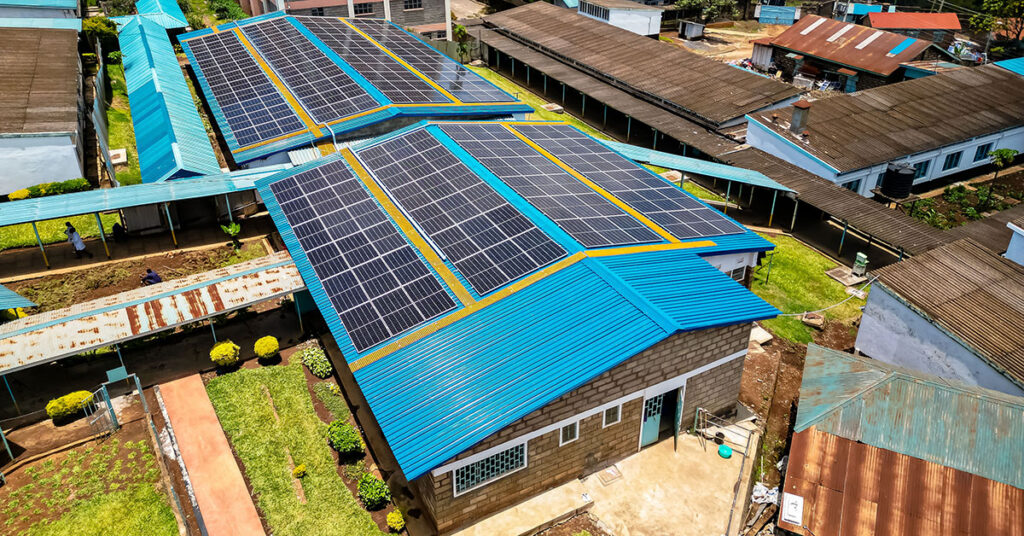
The SHIELD project (Solar Hospital Innovation for Energy Leasing Demonstrator), a University of Oxford and Astonfield Solar collaboration supported through Energy Catalyst Round 10, has developed a financing model for public healthcare, combining leasing, clean energy credits that attract global sustainability investment, and built-in research, where the project has used the model to install a solar system at Meru Teaching and Referral Hospital, one of Kenya’s busiest Level 5 facilities. Since completion in November 2024, daytime solar generation has displaced high-cost grid electricity and reduced reliance on diesel backup, delivering savings of approximately £4,500 to £6,000 per month. The hospital has redirected those savings into cancer treatments and a high dependency unit, and the vaccine cold chain is now protected by on-site generation.
Wind power in Somalia where the grid doesn’t reach
Somalia has the highest onshore wind power potential of any country in Africa, yet rural electricity access stands at about 30% and health supply chains run almost entirely on diesel. Conventional wind turbines have not filled the gap because they require specialist generators, imported components, and trained technicians for ongoing maintenance, exactly the infrastructure that decades of conflict have made unavailable.
The OxREGEN project, supported through Energy Catalyst Round 9 and led by the University of Oxford, is deploying a wind turbine and battery storage system at a medical supply warehouse in Garowe to power vaccine refrigeration and supply the surrounding community with lighting, water pumping, and mobile charging. A patented electrical circuit converts a standard, widely available induction motor into an off-grid generator, eliminating the specialist components conventional turbines require. The system is designed to be built from components in local supply chains and maintained with only basic training, so that communities are not left dependent on external technicians or imported parts.
Protecting the last mile in Nigeria
Hospitals and supply warehouses are only part of the picture. Vaccines must also travel to remote communities where no cold chain infrastructure exists, and where a single temperature excursion can render a consignment useless.
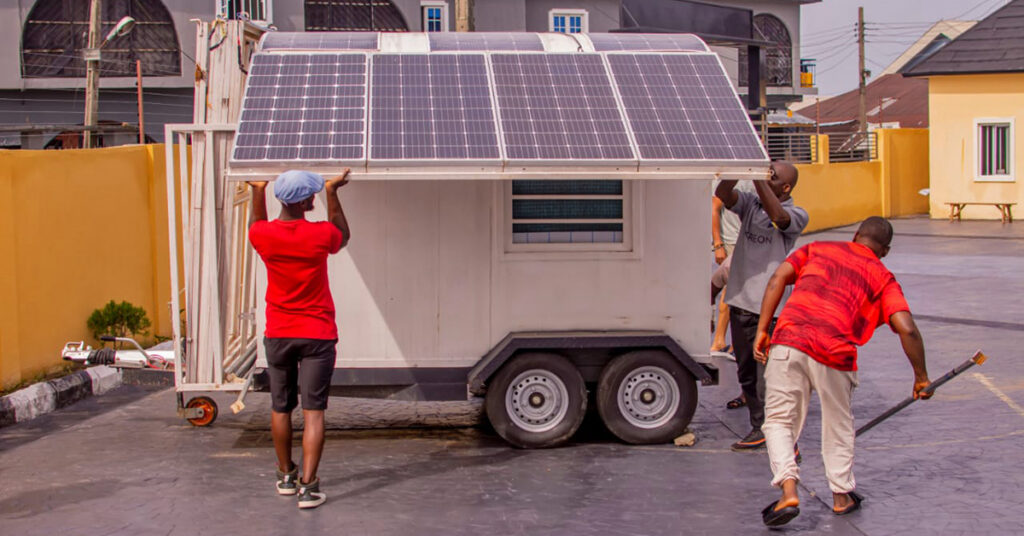
The Akreon Technology project, supported through Energy Catalyst Round 9, has developed EcoCool, a portable cooling solution powered by renewable energy for last-mile vaccine delivery in Nigeria. Using thermoelectric chillers, the system maintains uninterrupted temperatures between –10°C and 6°C for 24 hours with battery support, and was deployed across three states, Bayelsa, Delta, and Ogun, delivering vaccines to Primary Health Centres in rural areas while reducing delivery-related costs. Having completed its technical refinement phase, the project is now targeting commercial deployment between 2026 and 2027. It addresses the point in the chain where the other projects stop: beyond the warehouse and the clinic, at the point of delivery itself.
From demonstration to system change
As health systems face growing pressure from climate change, population growth, and expanding vaccination programmes, the demand for reliable clean energy in healthcare will only intensify. The Energizing Health report has already concluded that decentralised solutions are cost-effective, rapidly deployable, and do not require waiting for the grid. What Energy Catalyst’s healthcare projects add is evidence that those solutions can be designed to work in the specific conditions where they are needed most, from grid-connected hospitals in Kenya to off-grid supply chains in Somalia and the last mile of vaccine delivery in Nigeria.
What these projects demonstrate is that clean energy solutions for healthcare don’t have to wait for grid expansion,” says Andra Stancu, Programme Manager, Energy Catalyst. “Whether it’s solar at a county hospital, wind power at a supply warehouse, or portable cooling on the last mile, the technology exists to reach facilities the grid hasn’t. Energy Catalyst’s role is to help prove those models work, so that governments and investors can back them with confidence.