Powering education: clean energy from the classroom to the community
This is Part 3 of our series – Powering essential services: clean energy solutions transforming daily life in underserved communities.
The availability of reliable energy determines the shape of a school day in sub-Saharan Africa. Without it, class and learning schedules contract around daylight hours, computer laboratories stand unused, and critical aspects of service provision such as cooked meals are more difficult to operate consistently.
Yet grid connection alone is far from the end of the story. Among connected schools in the region, only 36% report electricity that works most or all of the time; outages and high tariffs can force schools to ration power or rely on costly diesel generators. Across Africa, only around 40% of primary schools and half of lower secondary schools are connected to the internet. Power and connectivity are separate barriers though related, as digital education cannot be expanded at scale without reliable electricity.
Making school electrification robust requires more than installation. UNICEF’s 2024 assessment of eastern and southern Africa put the cost of electrifying the region’s schools and health facilities at more than $5 billion, and highlighted what makes such investment last: systems that deliver water as well as power, local technicians able to maintain equipment, and models that share ongoing costs effectively.
Energy Catalyst, an Innovate UK programme supporting clean energy innovation in underserved markets, is backing projects that address each of those conditions. Three supported projects show the progression: from switching on a classroom, to training technicians who keep systems working, to turning schools into community energy hubs.
Switching on the classroom in South Sudan
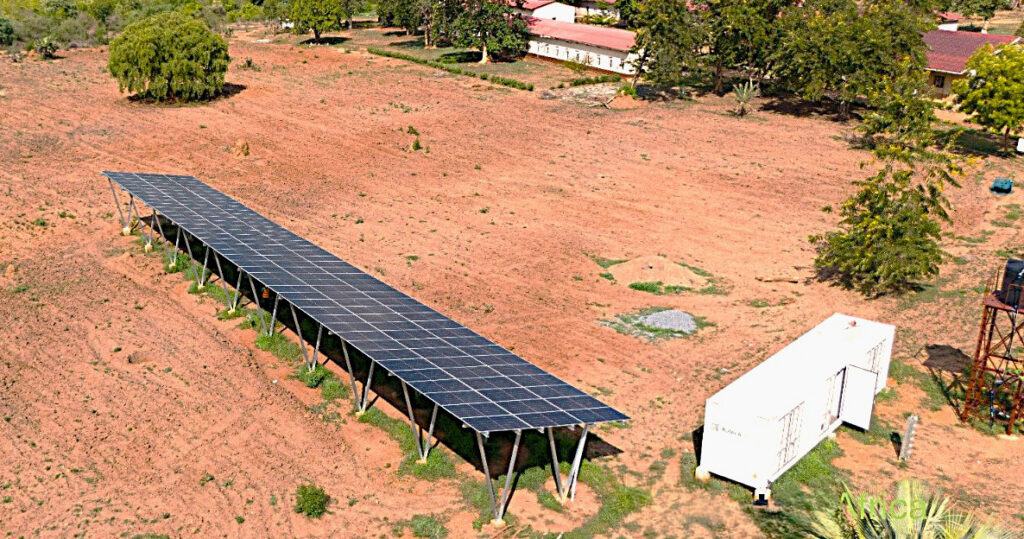
At schools and health facilities in South Sudan, grid power is scarce and diesel backup carries some of the highest fuel costs in the region. The Aptech Africa project, delivered with Smart Villages Research Group and supported through Energy Catalyst Round 10, which commenced in 2024, combines solar power, battery storage and solar water pumping to provide dependable electricity and water at essential community institutions.
In 2025, systems were commissioned across three facilities: one hospital with an integrated vocational school and two secondary schools. They now provide continuous, 24-hour power, and each institution reports monthly savings on energy and water, in some cases running to several thousand dollars. At one secondary school, a computer laboratory had stood idle for years because its machines depended on a generator that ran only at night; solar power and battery storage now allow students to take computer studies during the day. At the other school, reliable electricity has extended the usable school day beyond sunset.
The project model also links power to water. Solar pumps and community kiosks serve the institutions and nearby families. Donor-funded systems are typically handed to the host institution, which is then left to meet running and maintenance costs it cannot always afford. Here the kiosks are fully operational and cover their own running costs, reducing the need for ongoing subsidy.
Training the technicians who keep power on
Installing a solar system is only the beginning. If no one nearby can diagnose or repair a fault, equipment can remain out of service long after the panels are in place. Expanding renewable energy therefore depends on technical skills as well as hardware.
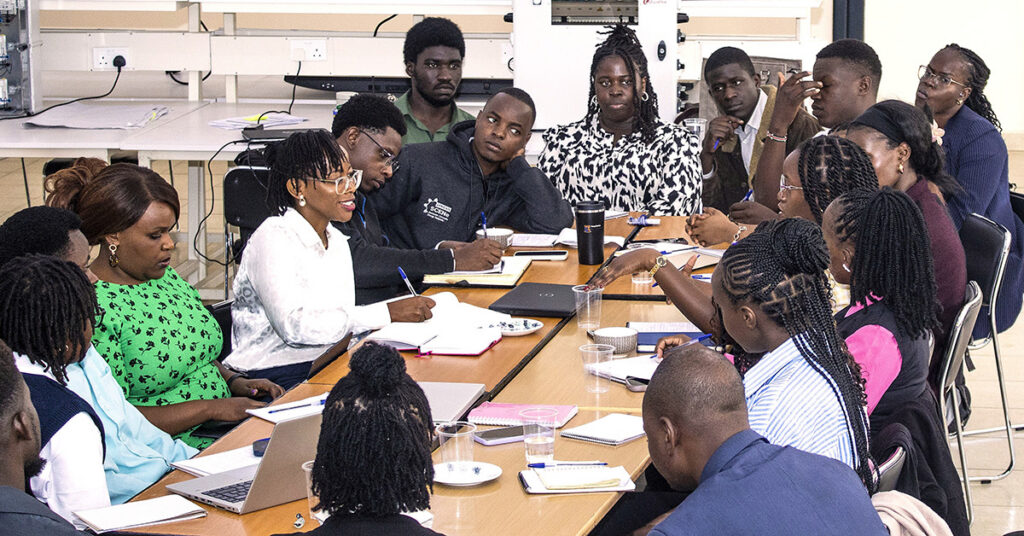
Open Energy Labs’ Energy Makers Academy, supported through Energy Catalyst Round 10 with the Transforming Energy Access Learning Partnership and Strathmore University in Kenya, combines a smartphone learning platform with a practical hardware kit. Students use the kit to build a working renewable electricity supply capable of powering lights and charging a mobile phone, learning how solar home systems are designed, assembled and maintained as they do so.
The platform also teaches higher- and further-education students to diagnose and repair systems of different brands, rather than training them around a single manufacturer’s equipment. The Round 10 project was designed to test the updated platform and hardware with 100 users in Kenya, while the technology is already used by two technical colleges in Zambia.
Its combination of mobile learning, practical hardware and cross-brand training gives the model the potential to be replicated across colleges, regions and different solar markets. In such settings, education does more than consume energy: it develops the people who can keep clean energy systems working and extend their benefits into more homes and communities.
Turning schools into community energy hubs in Nairobi
A third model takes the connection between education and energy beyond the classroom. Through the African SCENe project, supported by Energy Catalyst Round 9, which commenced in 2023, SmartKlub and its partners spent a year identifying schools in Nairobi’s informal settlements that could become clean energy hubs. The model puts each school’s own needs first, then uses surplus power and the premises outside teaching hours to support services for the surrounding community.
The feasibility study has since developed into a three-year pilot led by the universities of Nottingham and Strathmore, working with SmartKlub and local partners. Solar systems are being rolled out across nine schools and community learning centres in Kangemi and Kibera. The hubs are designed to power computer laboratories, lighting and clean electric cooking during the school day, then support services such as adult learning, laundry and solar water pumping after hours.
The model is already being tested in practice. At Kangemi Resource Centre, a solar array and 40 kWh battery kept lights and computers running through a three-day grid outage. The centre is also developing plans for solar-powered laundry, clean cooking and ICT services. By combining savings on energy and fuel with income from community services, the project is testing how schools can gain reliable power without taking on a financial and technical burden they cannot sustain.
From demonstration to system change
These projects show that the value of energy investment in education lies not only in what reliable power makes possible inside an institution, but in what educational institutions can then offer back to the community. Schools and colleges can develop technical skills, provide trusted platforms for community services and, in some cases, help meet the costs of keeping energy systems in operation.
Moving from demonstration to system change therefore means replicating more than hardware. It means adapting the skills, partnerships and financial arrangements around the technology to different institutions and settings.
Individual projects can become durable public infrastructure when the relationship runs both ways: energy enables education, while education builds the skills and institutions that help drive the clean energy transition.
“Clean energy for education does not have to wait for the grid to reach every school,” says Andra Stancu, Programme Manager, Energy Catalyst. “Energy Catalyst helps innovators prove not only that the technology works, but that it can keep working in the communities it is designed to serve.”